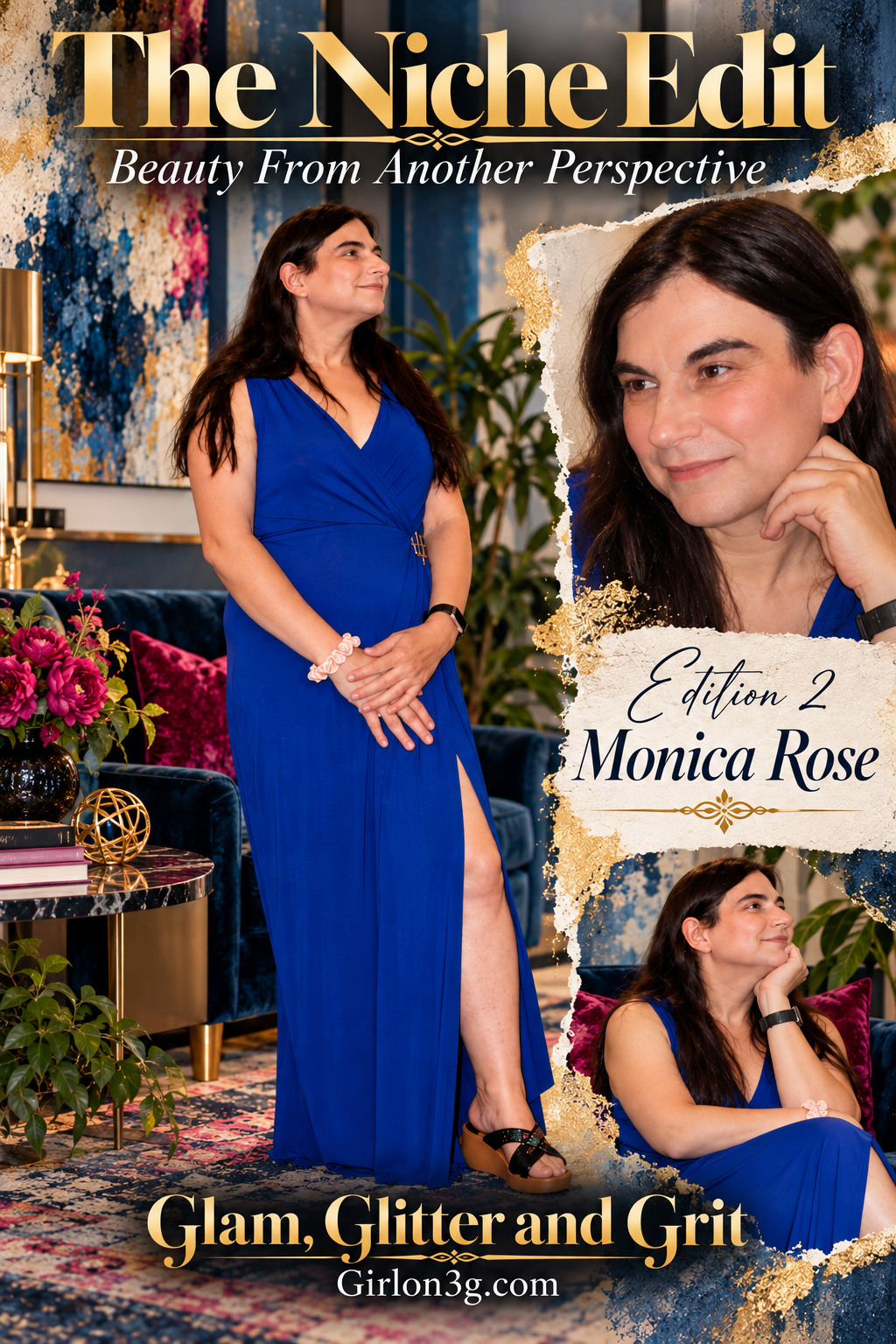
The Niche Edit- Monica Rose
Young, smooth, symmetrical, and familiar are the qualities repeated so often they feel like the definition of beauty. It is a narrow idea. Yet everything outside it is not less beautiful, only less represented. Beauty standards change when we stop overlooking the people, experiences, and perspectives that never fit. Monica Rose's beauty was claimed through experience and living authentically.
Janell McBride ·
The world has a narrow idea of what beauty looks like. Screens, magazines, feeds and advertising often repeat the same message: young, smooth, symmetrical, familiar. That narrowness doesn't make everyone else less beautiful. It just makes the portrayal incomplete. Beauty standards are not created by images alone. They are reinforced by what we are told is desirable. They are reinforced by what we are encouraged to change and what we are taught to overlook. That's why perspectives matter. They show us what gets missed when beauty is defined too narrowly. Monica Rose offers one of those perspectives. She's spent the last nine years building a life that doesn't fit neatly inside the beauty standards she was taught. She has learned to see beauty through experience rather than expectation. Monica is 47, a post op trans woman who began her transition at 38. She describes these nine years as “actively coming home to myself.” There is much more to that statement than a description of transition. Monica talks about the patience, resilience and inner work it took to stand firmly in her truth. She describes reaching post op womanhood as the most profound and transformative journey of her life. “My sense of self was hard earned, it wasn't given,” she says. That distinction matters to her. She holds her womanhood, her age and her peace with “immense gratitude and unshakeable pride.” She knows exactly what it took to arrive at them. Monica loved beauty long before she felt she had a place inside its traditional definition. She was fascinated by makeup, color and artistry. She loved transformation and “the subtle ways it could highlight a person's features.” What surrounded that fascination, however, was a much narrower lesson about what beauty was supposed to be. She was taught to see beauty as “an external performance.” It was something governed by rigid rules, traditional expectations and surface level perfection. It took her decades to unpack those early lessons. She eventuall